Source Folding Survival Multitool for Climbing, Outdoor, and Casual Use
Compare 30 Folding Survival Multitool options from verified Chinese manufacturers. Buyers can evaluate specifications like weight, size, and material to find suitable tools for climbing, outdoor activities, and casual use.
Key considerations
Products List
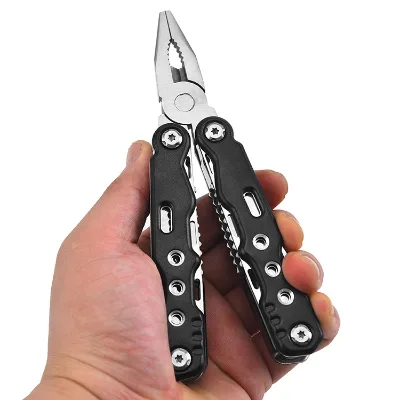


Outdoor Camping Survival Folding Tool Promotion Gift Tools Multitool with Pliers
$3.25 - $3.80
MOQ: 240 Pieces


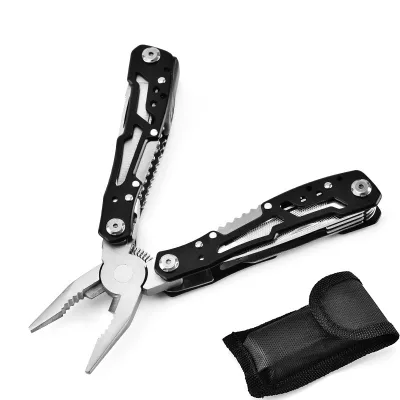
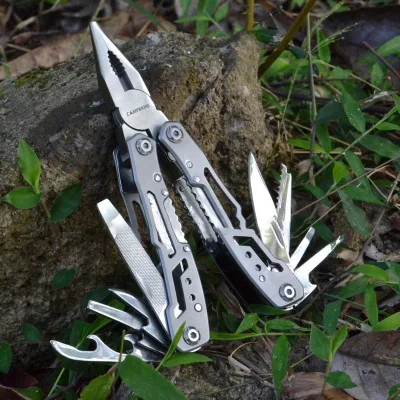


Outdoor Mini Pocket Tool Card Multi Purpose Survival Tool Card Pocket Tools
$1.00 - $3.00
MOQ: 3000 Pieces


Outdoor Camping Survival Metal Stainless Steel Multi Function Credit Multi Tool Card
$1.00 - $3.00
MOQ: 3000 Pieces


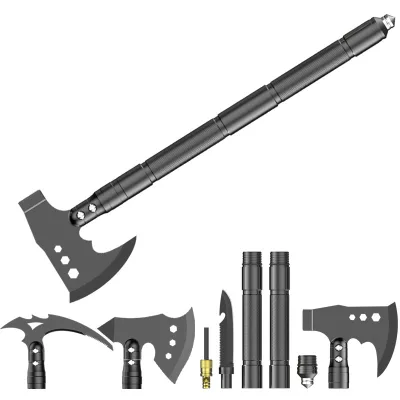
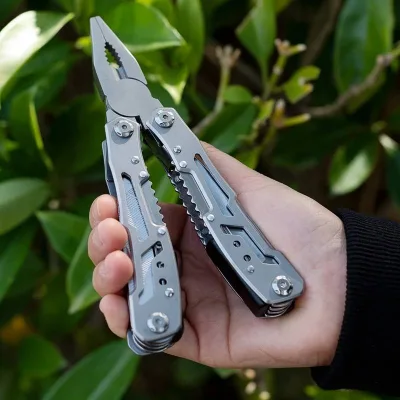
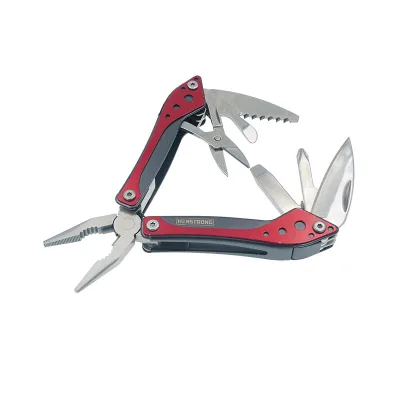
Bicycle Multitool Pocket,Bike Multitool Camping,Pliers Multitools Survival
$3.00 - $3.20
MOQ: 1000 pieces


Comprehensive Sourcing Guide
Strategic Sourcing Guide for Folding Survival Multitools
Understanding the Product Category and Technical Specifications
The Folding Survival Multitool represents a specialized segment of outdoor and industrial hand tools designed for versatility in compact form factors. When sourcing these items, buyers must first distinguish between general-purpose pliers and dedicated survival kits, as the technical specifications vary significantly based on intended use. The core product is typically defined as a portable multifunction knife plier, often categorized under survival kits or mini folding pliers. These tools are engineered to perform a wide array of functions, including cutting, wire stripping, crimping, and punching, making them suitable for both outdoor survival scenarios and specific industrial applications like building decoration.
A critical aspect of technical evaluation is the physical dimension and weight profile. Sourcing data indicates that these tools often come in compact configurations, with specific models featuring folded sizes around 8.2 to 10.6 cm and open sizes ranging from 10.2 cm to 16 cm. The physical footprint is essential for logistics; for instance, a standard single package size might be recorded as 10x10x5 cm, while the product itself may measure approximately 10.5x4.3x2 cm. Weight is another pivotal specification, with observed variations from lightweight units at 80g to heavier, more robust models weighing up to 284g. The material composition is predominantly stainless steel, ensuring durability and resistance to corrosion, which is vital for survival equipment exposed to harsh environments.
The structural integrity of the tool is often highlighted by specific joint designs, such as the half-box joint, which provides stability during high-torque operations. The handle color and finish also play a role in user identification and grip; options range from standard black to colorful or metallic finishes. Buyers should note that while some models are marketed specifically for outdoor activities like climbing, multisport, and casual use, others are explicitly designed for building decoration tasks. This duality requires a clear definition of the target application before finalizing specifications.
Compliance, Certification, and Standard Verification
In the B2B procurement of survival tools, verifying compliance and adherence to standards is a non-negotiable step. While specific certification names are not universally standardized across all listings, buyers must rigorously verify that the manufacturer adheres to relevant safety and quality benchmarks. The supplied context mentions specific product standards, such as weight standards (e.g., 205g) and dimensional standards (e.g., fold size and open size ratios). However, these are often internal product standards rather than external regulatory certifications.
Buyers should not assume that a product listing implies compliance with international safety standards like ISO or ASTM without explicit documentation. The procurement process must include a request for test reports or certification documents that validate the material quality, specifically the stainless steel composition, and the mechanical performance of the folding mechanism. For tools intended for professional use, such as wire stripping and crimping, electrical safety standards may apply.
Furthermore, the origin of the product is a key factor in compliance. The supply chain data indicates origins in major manufacturing hubs in China, including Zhejiang, Guangzhou, and Jiangsu provinces. Each region may have different local regulatory environments and export compliance records. Buyers must ensure that the supplier can provide proof of origin and that the manufacturing process meets the import regulations of the destination country. This includes verifying that the materials used do not contain restricted substances and that the final product meets the labeling requirements of the target market.
Cost Drivers and Pricing Dynamics
The pricing of folding survival multitools is influenced by a complex interplay of factors, including material costs, manufacturing complexity, customization levels, and order volume. The observed price range for these products is substantial, spanning from approximately $0.95 to $106 per unit. This wide variance suggests that the market includes both entry-level generic tools and high-end, feature-rich models with premium branding.
Material costs are a primary driver. The use of stainless steel is standard, but the grade of steel (e.g., 304 vs. 440C) significantly impacts the cost. Higher-grade steels offer superior edge retention and corrosion resistance, justifying a higher price point. Additionally, the complexity of the tool's design, such as the inclusion of multiple functions like wire stripping and crimping, adds to the manufacturing cost compared to simple cutting pliers.
Customization is another significant cost variable. The ability to add custom logos via laser printing or other methods is a common feature, but it introduces setup costs and potential minimum order quantity (MOQ) requirements. While some listings indicate an MOQ of 1 piece, others require volumes of 100 to 3000 pieces. The MOQ is often tied to the customization level; standard, non-branded items may have lower entry barriers, whereas fully customized products with specific packaging (e.g., PP Bag + Oxford Bag + Brown Box) require larger production runs to be economically viable.
Typical Applications and Use Cases
The versatility of the Folding Survival Multitool allows it to serve diverse applications across different sectors. In the outdoor and recreational sector, these tools are essential for camping, hiking, and climbing. Their compact size and lightweight nature make them ideal for survival kits where space and weight are at a premium. The ability to perform cutting, wire stripping, and punching makes them useful for emergency repairs, setting up shelters, or preparing food in the wild.
In the industrial and construction sectors, the application shifts towards utility and maintenance. The specific function of wire stripping and crimping indicates suitability for electrical work or building decoration tasks. The robust construction of the half-box joint ensures that the tool can withstand the rigors of professional use. The "Casual, Multisport, Climbing" designation suggests that the tool is marketed towards a broad audience, but the technical specifications like "Building Decoration" use place confirm its utility in trade environments.
Buyers must align the product selection with the end-user's specific needs. A tool designed for casual outdoor use may not possess the durability required for heavy-duty industrial applications. Conversely, a heavy-duty industrial tool might be over-engineered and unnecessarily expensive for a casual consumer. Understanding the primary use case is crucial for selecting the right model, whether it is a mini folding plier for personal carry or a more robust combination plier for professional use.
Supplier Evaluation and Sourcing Strategy
Evaluating suppliers for folding survival multitools requires a focus on capability, reliability, and transparency. The supply chain data reveals multiple production locations, including Zhejiang, Guangzhou, and Jiangsu, which are known for their manufacturing capabilities. Buyers should verify the supplier's capacity to handle the required order volumes, as MOQs can range from 1 piece to 3000 pieces depending on the model and customization needs.
When assessing a supplier, buyers should look for evidence of consistent quality control and the ability to meet specific technical requirements. The presence of specific model numbers, such as CM-SK083, SL-E118, ST1106-07, and ST1106-27, indicates a structured product line. A reliable supplier should be able to provide detailed specifications for each model, including dimensions, weight, and material composition.
Customization capabilities are also a key differentiator. Suppliers that offer laser printing for logos and various packaging options (e.g., nylon bags, PP bags, Oxford bags) demonstrate flexibility. However, buyers must ensure that the customization process does not compromise the quality of the tool. The supplier's ability to maintain the structural integrity of the half-box joint and the performance of the cutting and crimping functions during customization is paramount.
Quality Control and Long-Term Procurement Considerations
Quality control is essential to ensure that the folding survival multitools meet performance expectations. Key areas of inspection include the folding mechanism's smoothness, the sharpness and durability of the cutting edges, and the corrosion resistance of the stainless steel. The performance metrics, such as twisting and cutting capabilities, should be verified through sample testing. Buyers should request samples to evaluate the handle ergonomics, the strength of the joint, and the overall finish.
Long-term procurement considerations involve establishing a sustainable supply chain. This includes negotiating favorable terms for repeat orders, ensuring consistent quality across batches, and managing inventory levels to meet demand. The variability in packaging, from single nylon bags to complex box sets, should be standardized based on the target market's preferences.
Buyers should also consider the lifecycle of the product. A high-quality multitool should offer long-term value, reducing the need for frequent replacements. This involves selecting suppliers who use high-grade materials and have a reputation for durability. Additionally, the ability to source replacement parts or accessories, if applicable, can add value to the procurement strategy.
Comparative Analysis of Product Attributes
To facilitate decision-making, the following table summarizes key attributes observed across different product models, highlighting the variations in specifications and capabilities.
| Attribute | Model A (CM-SK083) | Model B (SL-E118) | Model C (ST1106-07) | Model D (ST1106-27) |
|---|---|---|---|---|
| Product Name | Portable Multifunction Knife Plier | Mini Folding Pliers | Combination Pliers | Combination Pliers |
| Origin | Zhejiang, China | Guangzhou, China | Jiangsu, China | China |
| Weight | 284g | 240g | 80g | 240g |
| Folded Size | 10.54.32cm | 10cm | 8.2*2.9cm | 8.2*2.9cm |
| Open Size | N/A | 16cm | 10.2*10.5cm | 10.2*10.5cm |
| Material | Stainless Steel | Stainless Steel | Stainless Steel | Stainless Steel |
| Functions | Cutting, Wire Stripping, Crimping | Cutting, Wire Stripping, Crimping | Cutting | Cutting |
| MOQ | 100 pcs | 200 Pieces | Varies | Varies |
| Packing | 1pc/Nylon Bag | PP Bag + Oxford Bag | PP Bag + Oxford Bag | PP Bag + Oxford Bag + Brown Box |
| Style | Outdoor Survival | Outdoor Survival | Outdoor Survival | Outdoor Survival |
This comparison underscores the importance of matching specific model attributes to procurement requirements. The weight and size differences are particularly significant for logistics and end-user portability. The functional capabilities, such as the inclusion of wire stripping and crimping, distinguish professional-grade tools from basic cutting implements. By carefully analyzing these attributes, buyers can make informed decisions that align with their strategic objectives.
FAQs
What are the typical dimensions for a Folding Survival Multitool?
Typical folded sizes range from 8.2 cm to 10.6 cm, with open sizes extending up to 16 cm. Specific models like the CM-SK083 measure 10.5 by 4.3 by 2 cm, ensuring compact portability for outdoor survival kits.
Can I order custom logos on these folding survival multitools?
Yes, custom logos are available and can be applied via laser printing. This customization option is standard for many models, though it may require meeting specific minimum order quantities depending on the supplier.
What materials are used to construct these folding survival multitools?
These tools are predominantly constructed from stainless steel to ensure durability and corrosion resistance. This material choice supports their function in harsh environments, including outdoor survival and building decoration tasks.
How much do folding survival multitools typically weigh?
Weights vary significantly by model, ranging from lightweight units at 80 grams to heavier models at 284 grams. The single gross weight for a standard package is often around 0.350 kg, affecting shipping logistics.
What is the minimum order quantity for these folding survival multitools?
Minimum order quantities vary by model, with some requiring as few as 1 piece and others up to 3000 pieces. Common requirements include 100 pieces per model per color or 200 pieces for specific configurations.
Where are these folding survival multitools manufactured?
Manufacturing locations include major Chinese hubs such as Zhejiang, Guangzhou, and Jiangsu provinces. These regions are known for producing stainless steel tools with various specifications and customization capabilities.
What functions do these folding survival multitools perform?
Functions include cutting, wire stripping, crimping, and punching, suitable for both outdoor and industrial use. Some models are specifically designed for building decoration, while others focus on casual multisport and climbing activities.